Robot Platforms and Locomotion
Building quadrupeds and the control that makes them robust in hardware
Design and co-design claims only mean something once a robot survives contact with the floor. This theme covers the platforms built to test them — quadrupeds designed for serviceability and repeatable experiments — together with the locomotion controllers that run on them. The recurring question is which modelling and control choices still hold up once real actuators, real compliance, and real impacts are in the loop.
Representative Projects

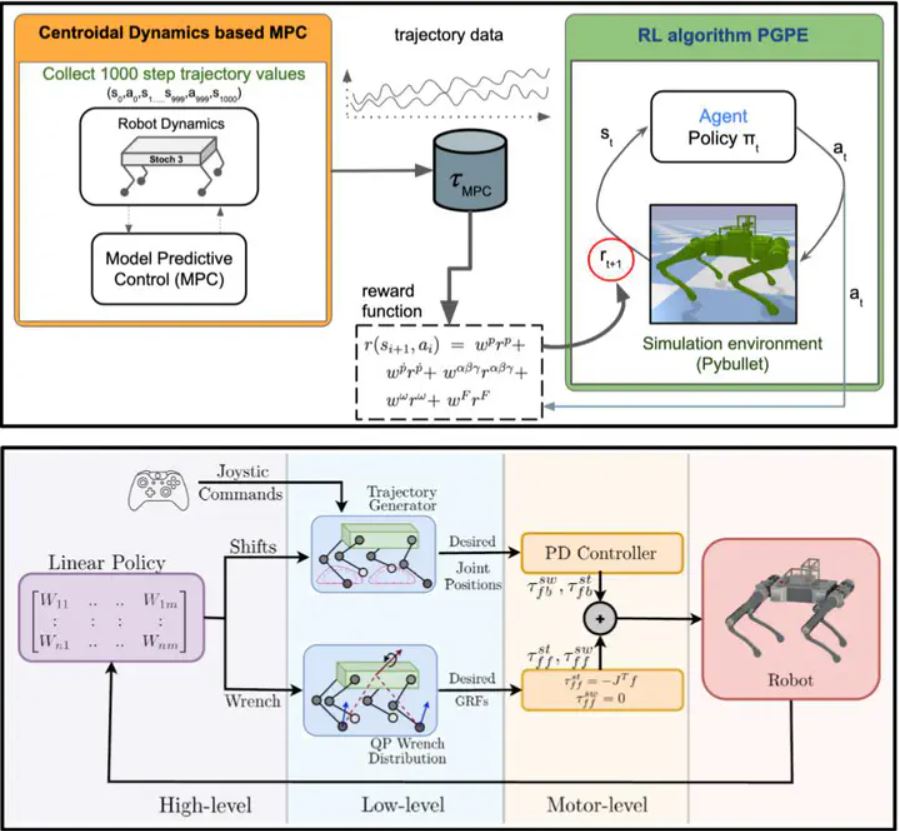
Force Control for Robust Quadruped Locomotion
TODO: ~45 words. A linear policy approach to force control for quadruped locomotion. Explain why a linear policy is worth preferring here, and what robustness it bought on hardware compared to the alternatives.

Dynamic Mirror Descent MPC for Accelerating Robot Learning
TODO: ~45 words. Model predictive control built on dynamic mirror descent to speed up robot learning. State the sample-efficiency problem it attacks and the gain it delivered.